

Morocco’s Sahara Desert beckons travelers with its endless golden dunes, star-filled skies, and timeless Berber culture. For visitors with limited time in Marrakech, a 2 day desert tour from Marrakech offers the perfect introduction to this mesmerizing landscape without requiring a week-long commitment. This compact yet comprehensive journey delivers the essence of the Sahara experience, combining adventure, cultural immersion, and natural beauty into an unforgettable 48-hour escape from the bustling medina.

Why Choose a Two-Day Desert Tour
The two-day desert tour from Marrakech strikes an ideal balance between time efficiency and authentic experience. While longer expeditions allow for more remote exploration, a well-planned two-day itinerary captures the highlights that make the Moroccan desert legendary: camel treks across towering dunes, nights spent in traditional Berber camps, sunrise over the Sahara, and passage through the dramatic Atlas Mountains and ancient kasbahs.
This condensed timeframe makes the desert accessible to travelers on tight schedules, families with young children, or anyone wanting to test their comfort level with desert camping before committing to longer expeditions. Despite the brevity, participants still experience the profound silence of the dunes, the warmth of Berber hospitality, and the transformative magic that draws people to deserts worldwide.
Day One: Journey Through the Atlas Mountains
Most two-day desert tours depart from Marrakech in the early morning, typically between six and seven o’clock. The journey begins with a scenic drive through the High Atlas Mountains via the Tizi n’Tichka pass, which reaches an elevation of 2,260 meters. This winding mountain road offers spectacular views of Berber villages clinging to hillsides, terraced agriculture, and snow-capped peaks that seem impossibly distant from the desert destination.
The first major stop usually occurs at Ait Benhaddou, a UNESCO World Heritage Site and one of Morocco’s most iconic fortified villages. This ancient ksar, constructed from rammed earth, has served as a filming location for numerous Hollywood productions including Gladiator, Game of Thrones, and Lawrence of Arabia. Travelers have time to explore the narrow alleys, climb to the hilltop granary for panoramic views, and understand how traditional Moroccan architecture evolved to suit the harsh climate.
Continuing southeast, the route passes through Ouarzazate, often called the “Gateway to the Sahara” and home to Morocco’s film studios. The landscape gradually transitions from mountain peaks to arid plateaus, then to the lush Draa Valley with its palm groves and ancient kasbahs. This valley represents one of Morocco’s most important agricultural regions, where dates, almonds, and vegetables grow in striking contrast to the surrounding desert.
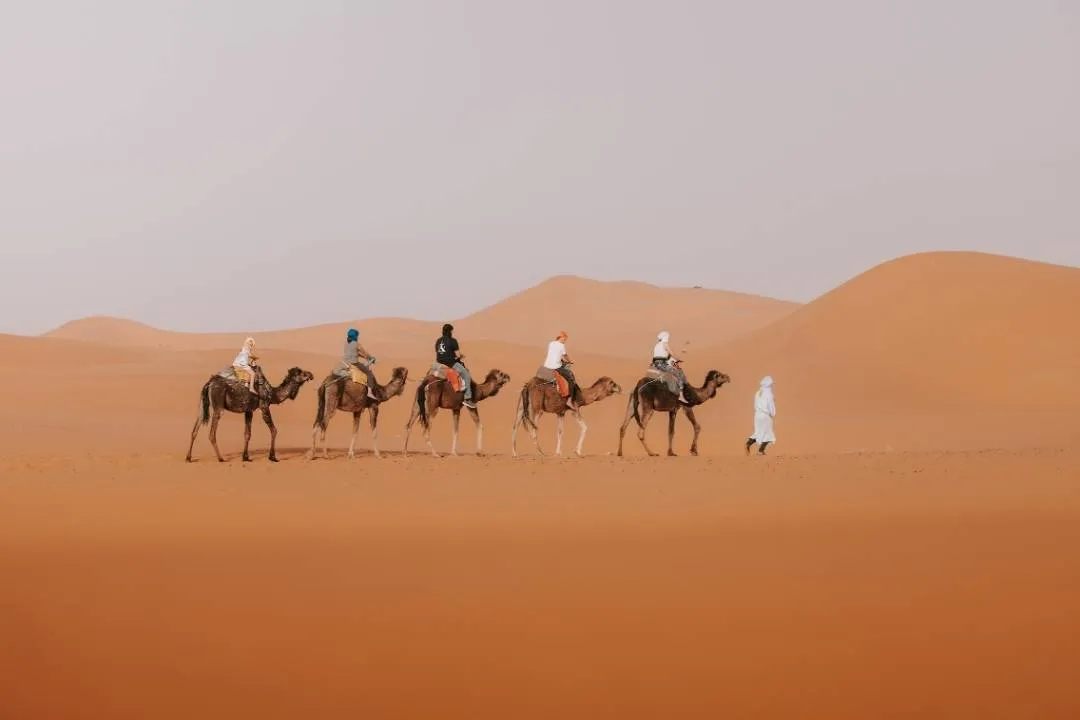
By late afternoon, the tour reaches the edge of the Erg Chigaga or Zagora dunes, depending on the specific itinerary. Here, participants transfer from vehicles to camels for the traditional desert approach. The camel trek, lasting approximately one to two hours, carries travelers deeper into the dune field as the sun descends toward the horizon, painting the sand in shades of amber, rose, and deep orange.
The Desert Camp Experience
Arrival at the Berber camp coincides with sunset, one of the Sahara’s most spectacular daily performances. Traditional camps feature comfortable nomad-style tents equipped with beds, blankets, and basic furnishings. While facilities remain rustic, most camps now offer solar-powered lighting, shared bathroom facilities, and surprisingly comfortable sleeping arrangements that honor tradition while acknowledging modern comfort expectations.
Evening activities center around the communal space where Berber hosts prepare traditional tagine dinners over open fires. The meal typically includes chicken or vegetable tagine, couscous, fresh bread, and Moroccan salads, followed by mint tea and seasonal fruit. After dinner, hosts often provide musical entertainment, playing traditional drums and inviting guests to join in songs that have echoed across these dunes for generations.
The night sky above the Sahara reveals itself as one of Earth’s premier stargazing locations. Far from any light pollution, the Milky Way stretches visibly overhead, and shooting stars streak regularly across the darkness. Many travelers describe this astronomical display as the tour’s most memorable element, offering perspective and wonder that photographs cannot capture.
Day Two: Sunrise and the Return Journey
The second day begins before dawn, when guides wake participants to witness sunrise over the dunes. Climbing to a nearby crest reveals the transformation as darkness gives way to soft blues and purples, then dramatic oranges and golds as the sun breaks the horizon. The desert’s texture becomes visible in the low-angle light, revealing every ripple and pattern sculpted by wind across the sand.
After a simple breakfast at camp, travelers return by camel to meet their vehicles. The return route often differs from the outbound journey, incorporating new sights and perspectives. Common stops include visits to local cooperatives where women produce argan oil using traditional methods, opportunities to see fossil deposits in the Atlas foothills, and breaks at scenic viewpoints overlooking valleys and gorges.
The drive back through the Atlas Mountains offers fresh appreciation for Morocco’s geographic diversity. Within a single day, travelers transition from pure desert to mountain heights, experiencing dramatic climate and landscape changes that illustrate why Morocco has captivated explorers and travelers for centuries.
Most tours arrive back in Marrakech by early evening, allowing participants to return to their accommodations with time to rest, process their experiences, and prepare for their next adventures. The timing makes two-day tours ideal for those with continuing travel plans or flight schedules that don’t accommodate longer absences from the city.
What Sets Quality Tours Apart
Not all two-day desert tours offer equal experiences. Quality operators distinguish themselves through several key factors: experienced drivers familiar with mountain roads and desert conditions, knowledgeable guides who share cultural context and historical information, well-maintained vehicles suitable for long-distance travel, established relationships with authentic Berber camps, and small group sizes that ensure personal attention and flexibility.
The best tours balance structured itinerary elements with spontaneous moments, allowing time for photography, interaction with locals, and exploration beyond scheduled stops. Guides should speak multiple languages fluently and possess deep knowledge of Berber culture, Moroccan history, and the desert ecosystem.
Transportation comfort matters significantly on these long-distance journeys. Modern 4×4 vehicles with air conditioning, comfortable seating, and proper maintenance make the extensive driving portions far more enjoyable. Some premium tours offer private options for couples or families seeking more intimate experiences.
Practical Considerations and Preparation
Two-day desert tours require minimal special preparation but benefit from thoughtful packing. Essential items include comfortable walking shoes, layers for temperature fluctuation, sun protection, a flashlight for nighttime camp navigation, and cameras with extra batteries. Desert nights can be surprisingly cold, especially between November and March, so warm clothing proves necessary despite daytime heat.
Most tour packages include transportation, guide services, camel trek, camp accommodation, dinner, breakfast, and sometimes lunch. Travelers should clarify what’s included when booking to avoid surprises. Water is typically provided during transport, but bringing additional bottles ensures adequate hydration in the dry climate.
Physical fitness requirements remain modest for standard two-day tours. The camel riding involves minimal exertion, and walks are short and optional. However, participants should consider that bathroom facilities at desert camps are basic, and medical services are hours away from the dune camps.
Conclusion
A 2 day desert tour from Marrakech compresses the vast Sahara experience into an achievable adventure that fits tight travel schedules without sacrificing authenticity or impact. These journeys deliver genuine connection with Morocco’s desert landscape, Berber culture, and the timeless rhythms of nomadic life that continue in the 21st century.
The tour’s true value extends beyond its component parts the mountains, kasbahs, camels, and stars. It lies in the complete sensory experience: the scent of desert herbs after sunset, the texture of sand beneath bare feet, the taste of tagine cooked over open flame, and the profound silence that fills spaces between conversations around the campfire. For many travelers, these 48 hours become the highlight of their Moroccan journey, creating memories that endure long after the desert sand has been shaken from their shoes.
Whether seeking adventure, cultural insight, or simply escape from urban intensity, the two-day desert tour from Marrakech delivers an accessible yet authentic Sahara experience that honors both tradition and modern travel expectations.
Frequently Asked Questions
What is the best season for a two-day desert tour from Marrakech?
Spring (March-May) and autumn (September-November) offer ideal conditions with moderate temperatures ranging from 20-30°C during the day and cool nights. Winter provides excellent weather but cold nights, while summer heat (often exceeding 40°C) can be extreme and uncomfortable for many travelers.
Is the two-day tour suitable for children and elderly travelers?
Yes, most two-day tours accommodate all ages with reasonable mobility. The camel riding is gentle, and walking is minimal. However, families should consider that young children may find the long drive challenging, and elderly participants should ensure they’re comfortable with basic camping facilities and extended vehicle travel.
Can I do a two-day tour if I’m traveling solo?
Absolutely. Most operators offer shared group tours where solo travelers join others, making the experience affordable and social. Private tours are available at higher rates for those preferring exclusive experiences. Solo travelers often find the group dynamic enhances the adventure.
What happens if weather conditions are unfavorable?
Reputable operators monitor conditions and adjust itineraries for safety. Sandstorms are rare but may require route modifications. Rain is extremely uncommon in desert regions but could affect Atlas Mountain passes in winter. Tours typically proceed unless conditions pose genuine safety risks.
Are dietary restrictions accommodated on desert tours?
Professional tour operators accommodate vegetarian, vegan, gluten-free, and other dietary needs when notified during booking. Moroccan cuisine naturally offers many plant-based options, making vegetarian requests particularly easy to fulfill. Always communicate requirements clearly when reserving your tour.